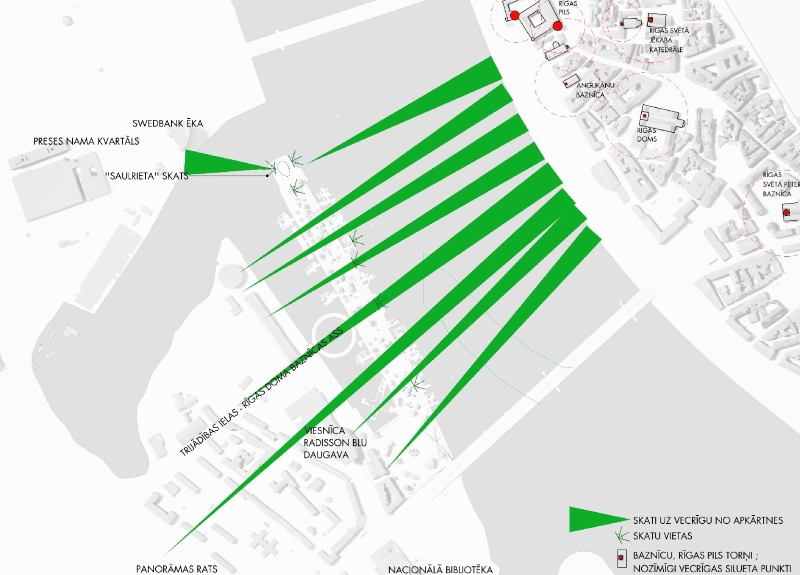
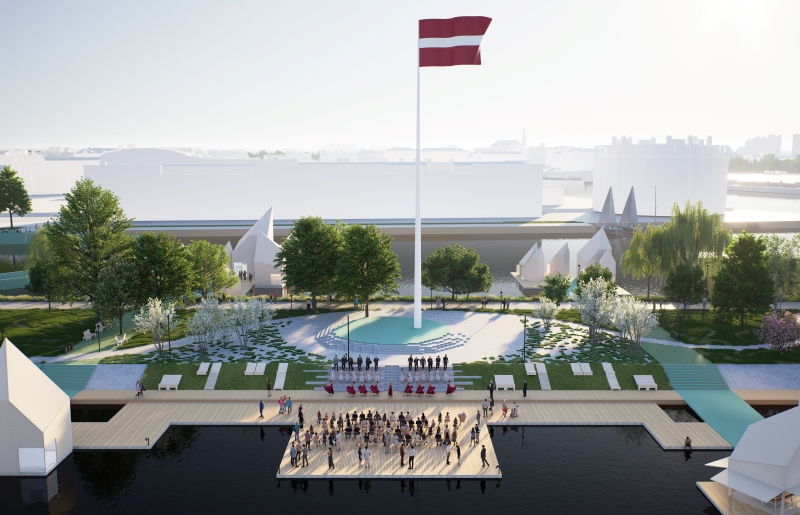
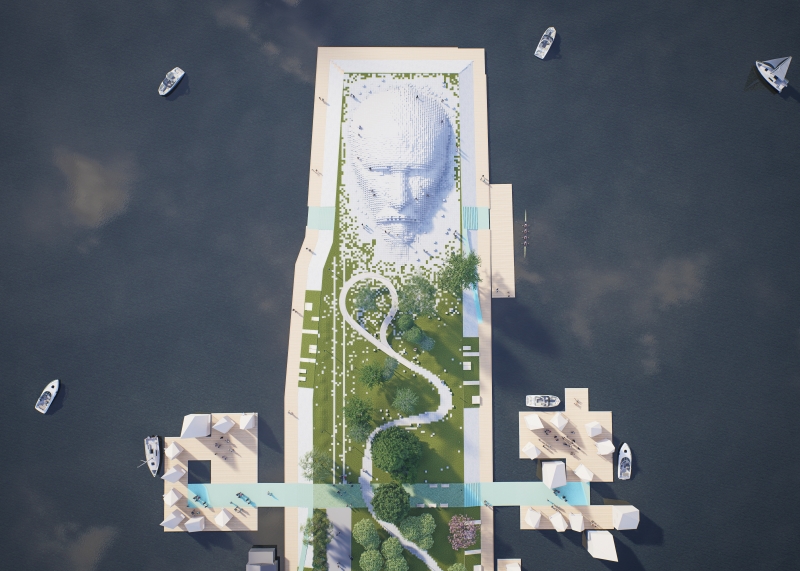
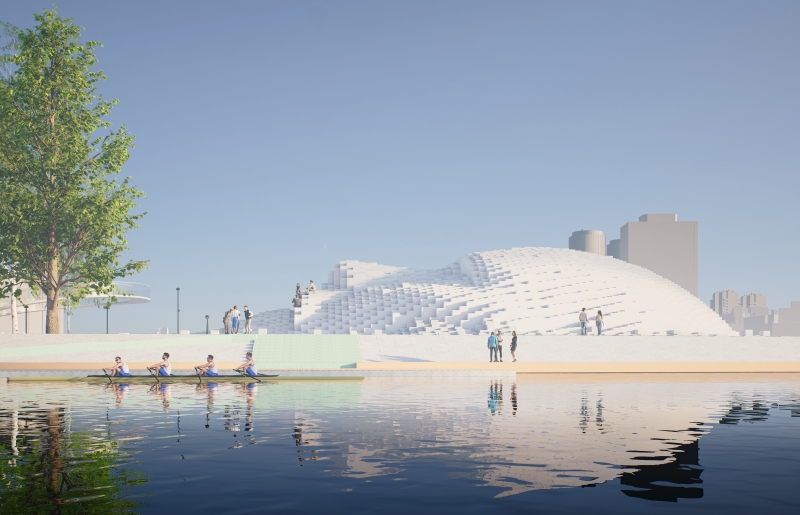
FIRST President of Latvia Jānis Čakste with a view of the castle.
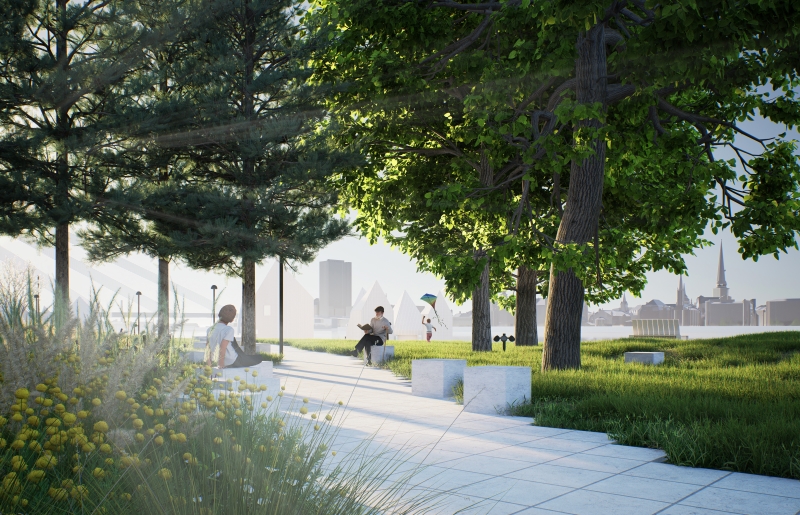
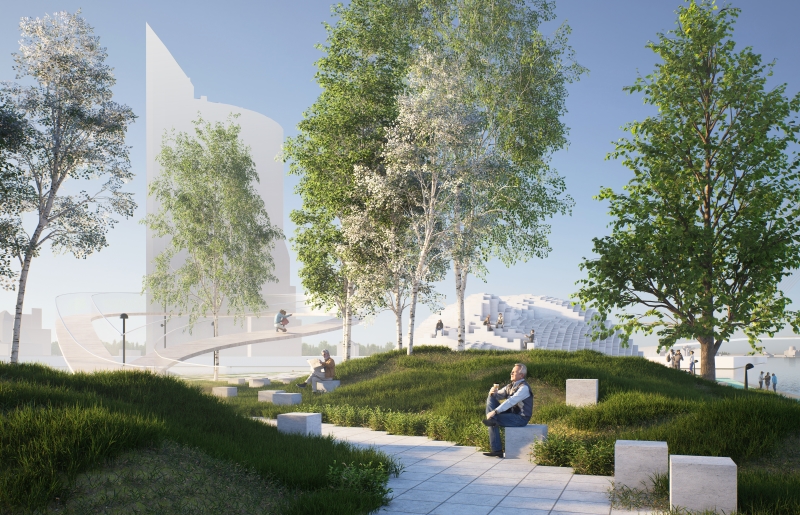
FIRST forest park in the middle of the Daugava.
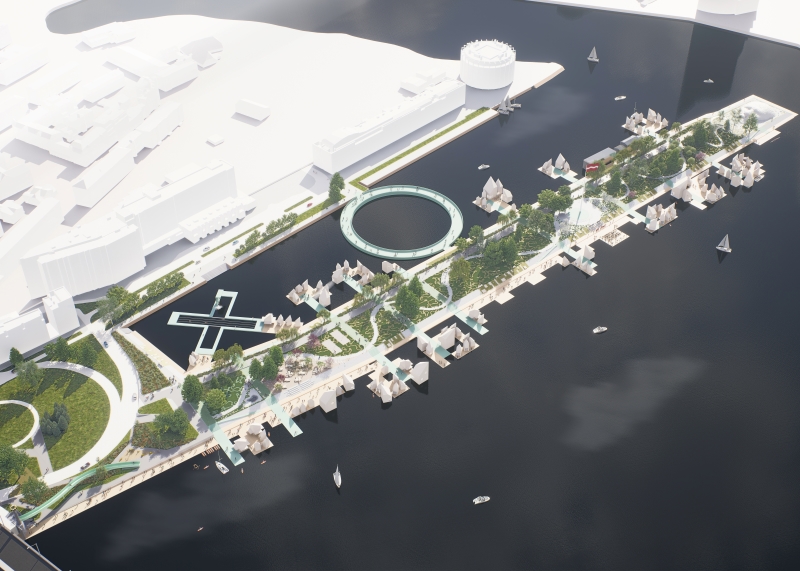
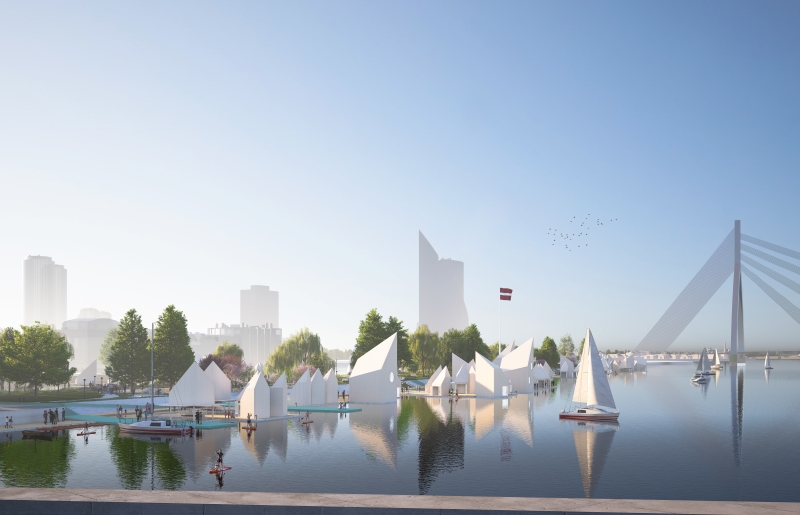
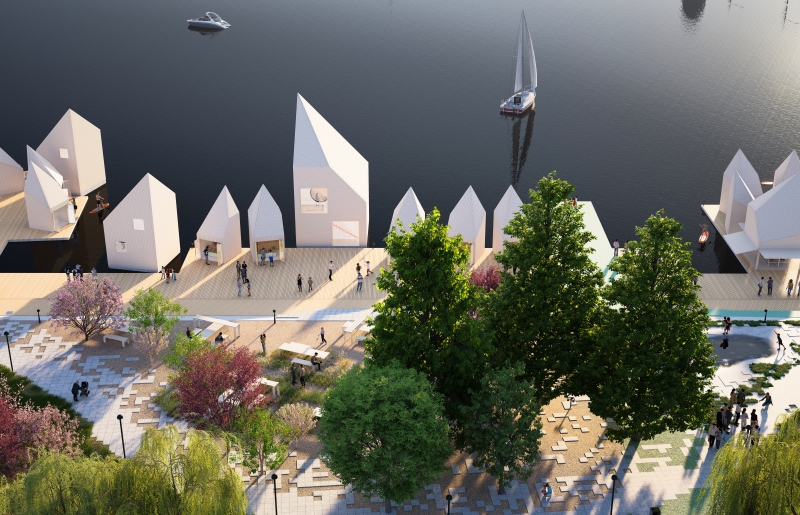
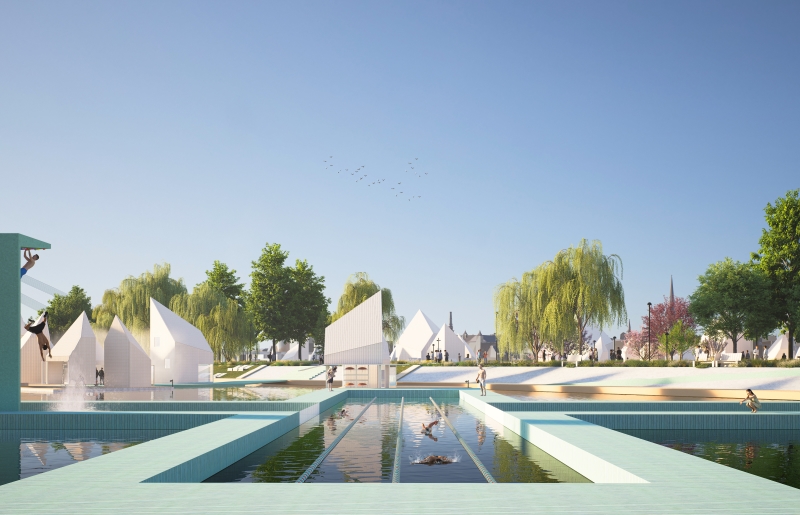
FIRST quarter of floating houses in Riga. Life on the water.
The enhanced AB Dambis, ending at the Jānis Čakste memorial site, could become the natural continuation and logical destination of the currently reconstructed 2.4 km-long Mūkusalas promenade.
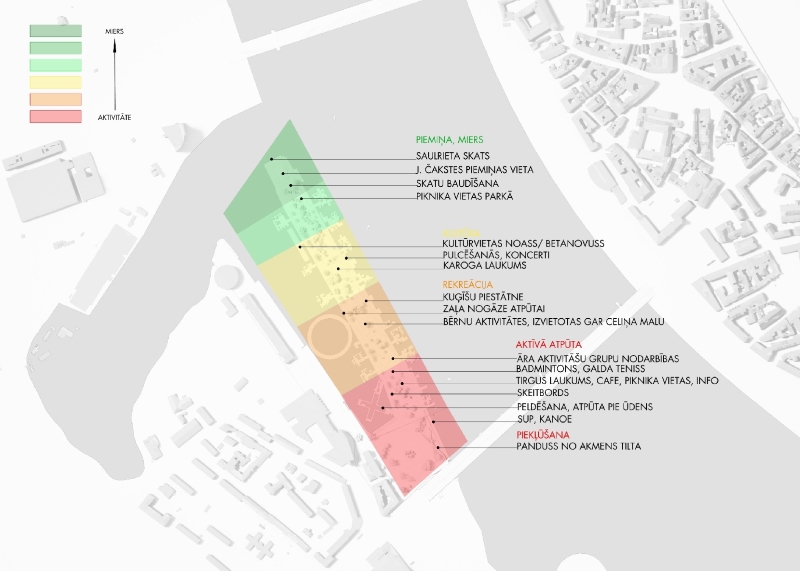
The AB Dambis / Jānis Čakste Waterfront has the potential to realise many of the possibilities not yet fully explored along the promenade — creating a functionally rich, well-designed, human-centred and tourist-attracting recreational area surrounded by water in the very centre of the city. It would organically combine spaces for commemoration, celebrations, events and everyday activities.
The Jānis Čakste Waterfront is envisioned as a maximally green and scenic landscape, with all built structures and infrastructure placed outside the dam itself — on the water. In this way, the entire existing area from Akmens Bridge to the northern end of the dam would be dedicated to a park, preserving the existing trees, planting new ones, and introducing landscape-forming green mounds, shrub and perennial planting, conceptually applied paving materials, outdoor furniture, lighting and planting design, all in accordance with the principles of universal design and sustainability.
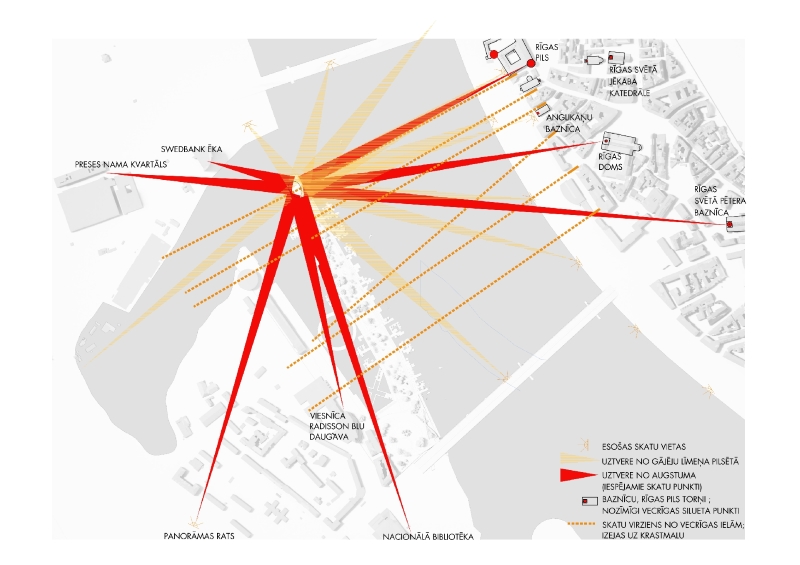
Infrastructure elements are proposed on concrete pontoons, grouped according to function and arranged to create view corridors between them, framing the most significant views in both directions from the park.
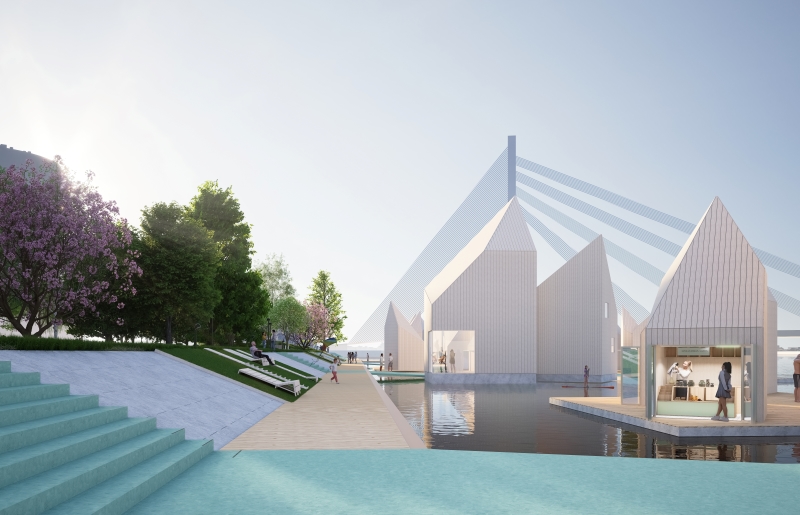
The planned small-scale floating houses (1–2 storeys) are designed using insulated CLT panels with painted timber cladding. Their compact scale, combined with a distinctive formal language, creates a strong scenic quality when viewed from the direction of the Old Town.
The architectural language of the floating houses acts as a counterpoint to the spires of the Old Town skyline on the opposite riverbank, ensuring their integration into the historic urban landscape of Riga. More broadly, these same sculptural forms can already be seen in the roofscape of the National Library of Latvia, making this a logical continuation.
At the same time, the irregular white-painted volumes evoke ice formations caught along the dam, reinforcing their belonging within the landscape of the Daugava River. Their form also continues the historical lineage of the wooden shelters once used by fishermen and timber rafters, reinterpreted in a contemporary architectural language.
Floating houses have not yet been successfully introduced along the Daugava riverfront, and this location is considered fully suitable for such floating infrastructure.
Their technical maintenance and engineering connections can be implemented in compliance with environmental protection requirements, similarly to the standards applied in the best marinas.
The concrete pontoons are conceived as a modular system of equal-sized elements, capable of being combined into different functional clusters. Each pontoon would be individually anchored according to technical requirements, without overloading the structural capacity of the dam.
The platforms on the concrete pontoons would be connected to the shore structure by movable gangways, allowing them to accommodate fluctuations in water level.
|